Test Drive: Mr. Paint
Recently, I was testing out a few new metallics, trying to sort out what exactly I want to use on the F-104. In that test, I came away rather impressed…

Recently, I was testing out a few new metallics, trying to sort out what exactly I want to use on the F-104. In that test, I came away rather impressed…
Recently, some well meaning commenters have intimated that I am some kind of aspiring modeling dictator, telling everyone else what and how to model.
While nothing could be further from the truth (I will tell you what and how I think you should model), it got me thinking. If I was some kind of scale modeling il duce, what would I do with that bizarrely niche power?
I sure wouldn’t tell people how to pursue their particular flavor of the hobby. Instead, I’d level my proclamations at those make the kits and paints and yes, the aftermarket sets. Because there’s a whole lot of bullshit that you, me, and a whole lot of other modelers put up with that we simply shouldn’t have to. Not in this day and age.
Let’s start with cockpit sets.
With a few weird exceptions, aftermarket cockpit sets come in two flavors – resin and photo etch. The former is generally a total replacement for the kit plastic, while the latter is often employed more as an applique over the kit parts.
Resin’s big advantage is DETAIL, particularly detail in terms of texture, depth and complexity. Now that CAD and 3D printing are finding their way into the hobby, the amount of detail that resin sets can pull off is truly staggering.

Resin’s big disadvantage? That’s easy – FIT. Seats are one thing. But when we’re talking about full-on cockpit sets, the odds of them being drop-fit replacements for kit parts is almost zero. This leads to lots of sanding and test-fitting and swearing and – at least for me – is probably the most likely way to get me to shove a kit back into its box and move on to something different.

I can hear it now.
“But…some modeling skill required!”
Screw modeling skill. If I’m going to be paying top dollar for an aftermarket pit, the damn thing should fit. Without having to hack the kit to pieces to do so.
Photo etch’s biggest advantage is in recreating scale thickness. A great example is this lovely gunsight frame for Trumpeter’s 1/32 P-47:

It’s also got its uses for representing fine details – cockpit sills, instrument panel bezels and so on. But a lot of the PE on offer these days is the colored, console-detail variety.
Over the years, I’ve come to loathe color PE. It has this weird ability to look really great on the fret, and then go completely flat, limp, and fake-looking when you put it into your cockpit.

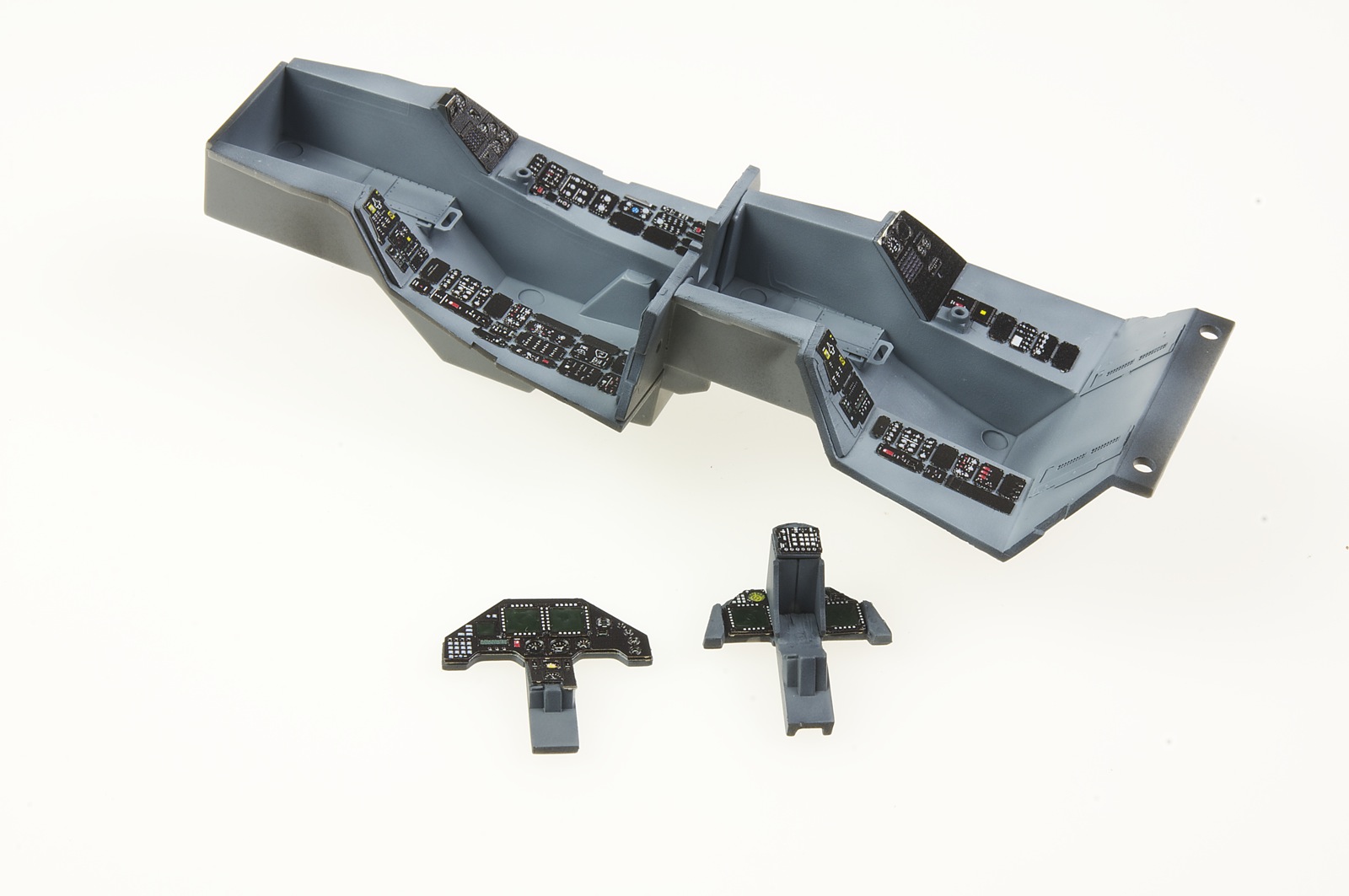
Part of the problem is that PE sucks at representing depth. The other part is that the color PE is often either off-color, grainy, or both.
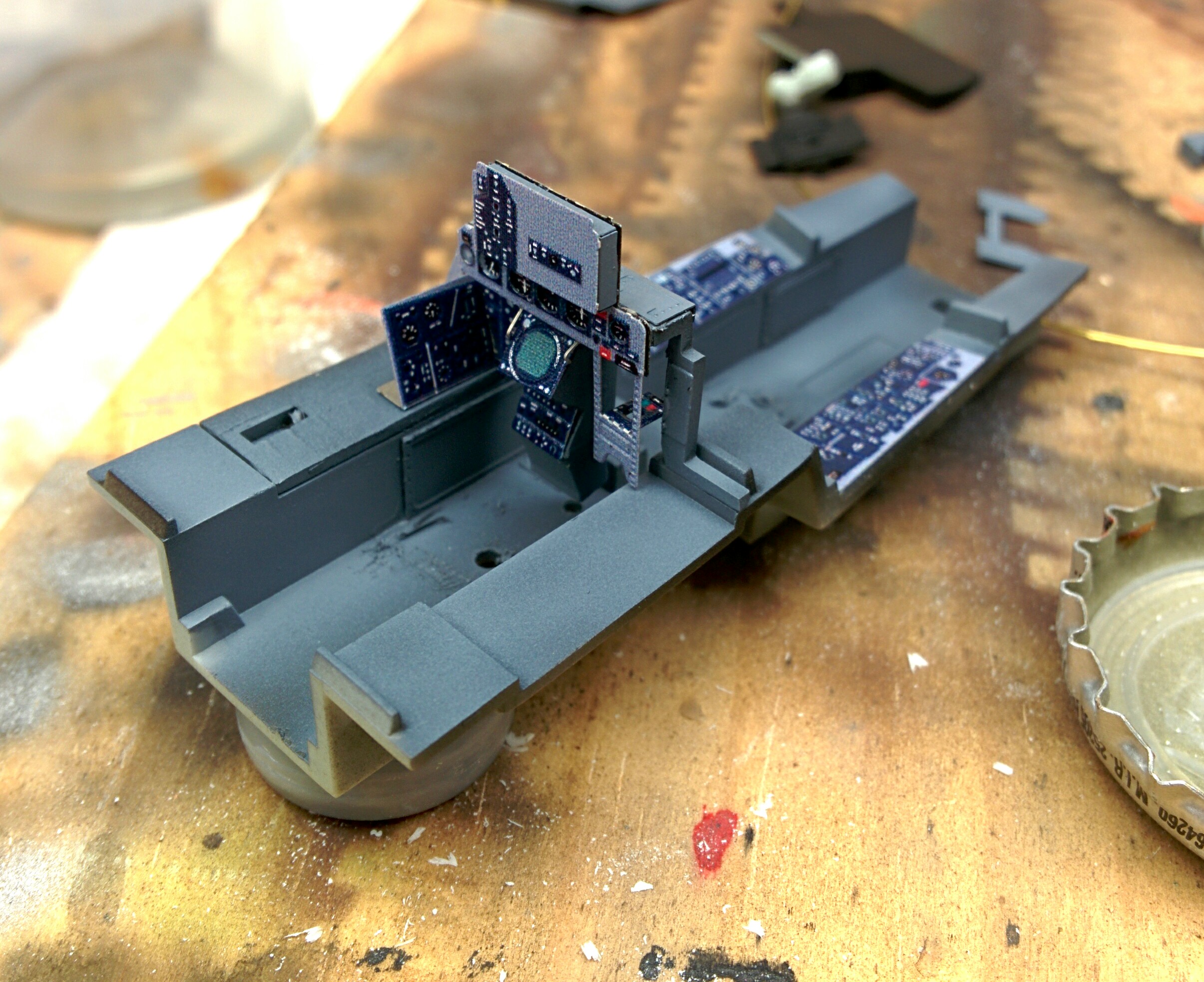
A lot of times, Eduard (and others…but let’s face it…they’re the 800-lb gorilla here) will even oblige you to file off kit detail to install the PE, leaving you up a creek when you look on with horror at your shitty PE side consoles.

In my quest to avoid the fit issues of resin, and the color-matching and flatness issues of PE, I’ve increasingly been doing my damnedest to bring kit parts up to snuff, and use resin seats and other bits to goose the detail level.
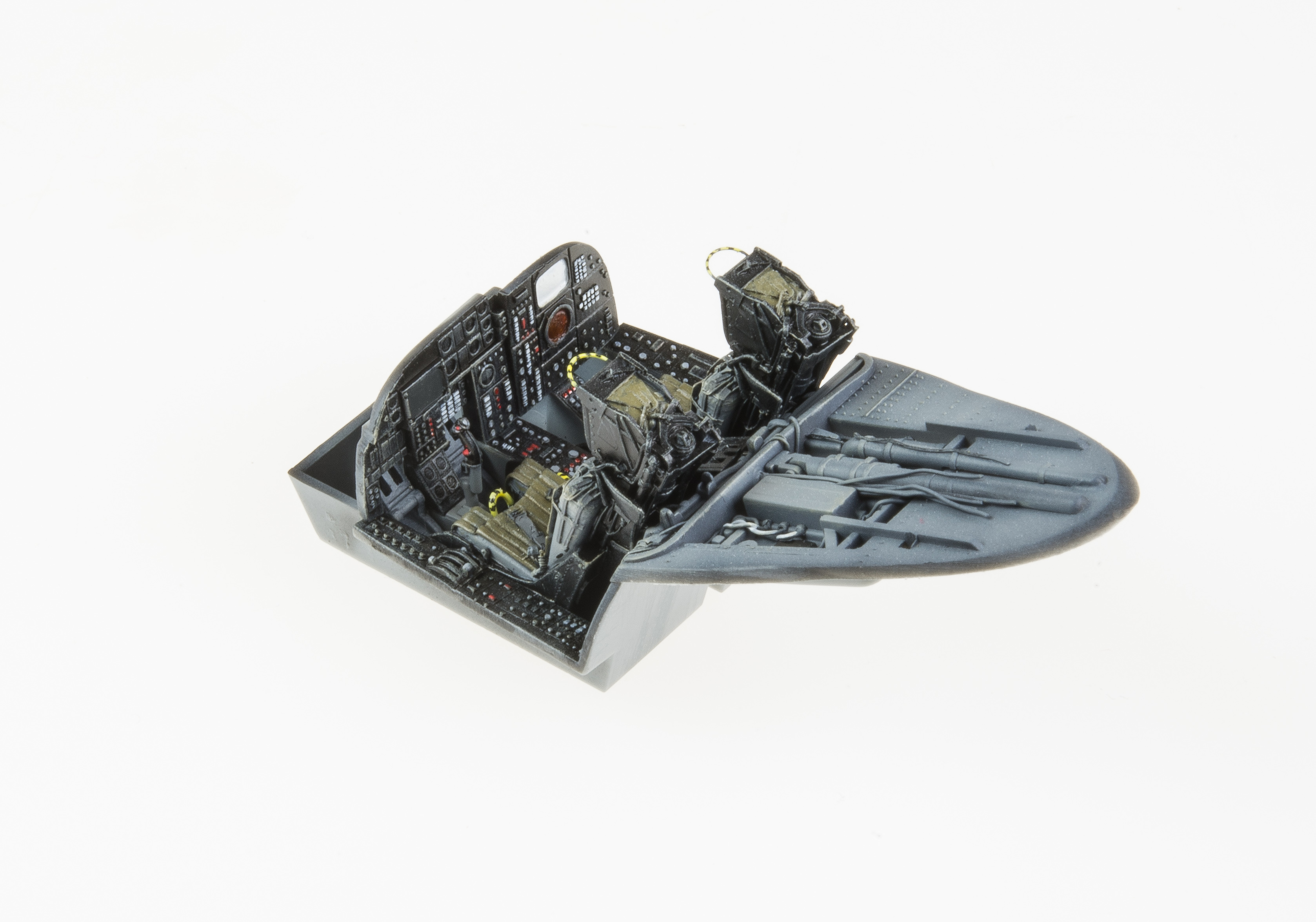

But I would so much prefer to have the delicious detail of resin and/or photo etch, since for the most part kit cockpits aren’t the best.
So, as modeling dictator, here’s what I would order on pain of death: (more…)
At work, everyone wants to own their little slice of “strategy”, to the point where the term itself has become – I won’t say meaningless – but certainly confused.
Over the past week, I’ve been on vacation. Away from the bench and largely away from the computer. I’ve done more following and reading than I have ranting…and I’ve had some time to think, if that’s what you call the random firing of synapses after long days of taking three kids around Disney World.
And it seems to me that a lot of the butthurt and fur-raising associated with weathering is similar – the term is too broad, too catch-all.
It confuses evidence and reference with technique. It conflates different types of weathering. And it sets up this weird and annoying “nobody is wrong” dynamic that, ultimately, does nothing for anybody.
If that’s the case, why bother talking and debating and digging up reference photos and seeking greater understanding at all?
So I thought it might be helpful to propose some new terminology to specify what we’re talking about. Which will no doubt raise the typical claims that I’m telling others how and what to model. A common, specific terminology – so evil, right? (more…)
Let's talk about video. If there's one request I get more than any other, it's for more video content. And I always dodge, because, well, video is pretty work-intensive. Photos…