
Stupid Bogey Tricks
Using magnets to overcome later handling frustrations with VVSS suspension bogeys.

Using magnets to overcome later handling frustrations with VVSS suspension bogeys.

If you've ever taken a photo of a model, you've almost certainly experienced it. A depth of field too shallow to show your entire build in sharp focus. While it's…
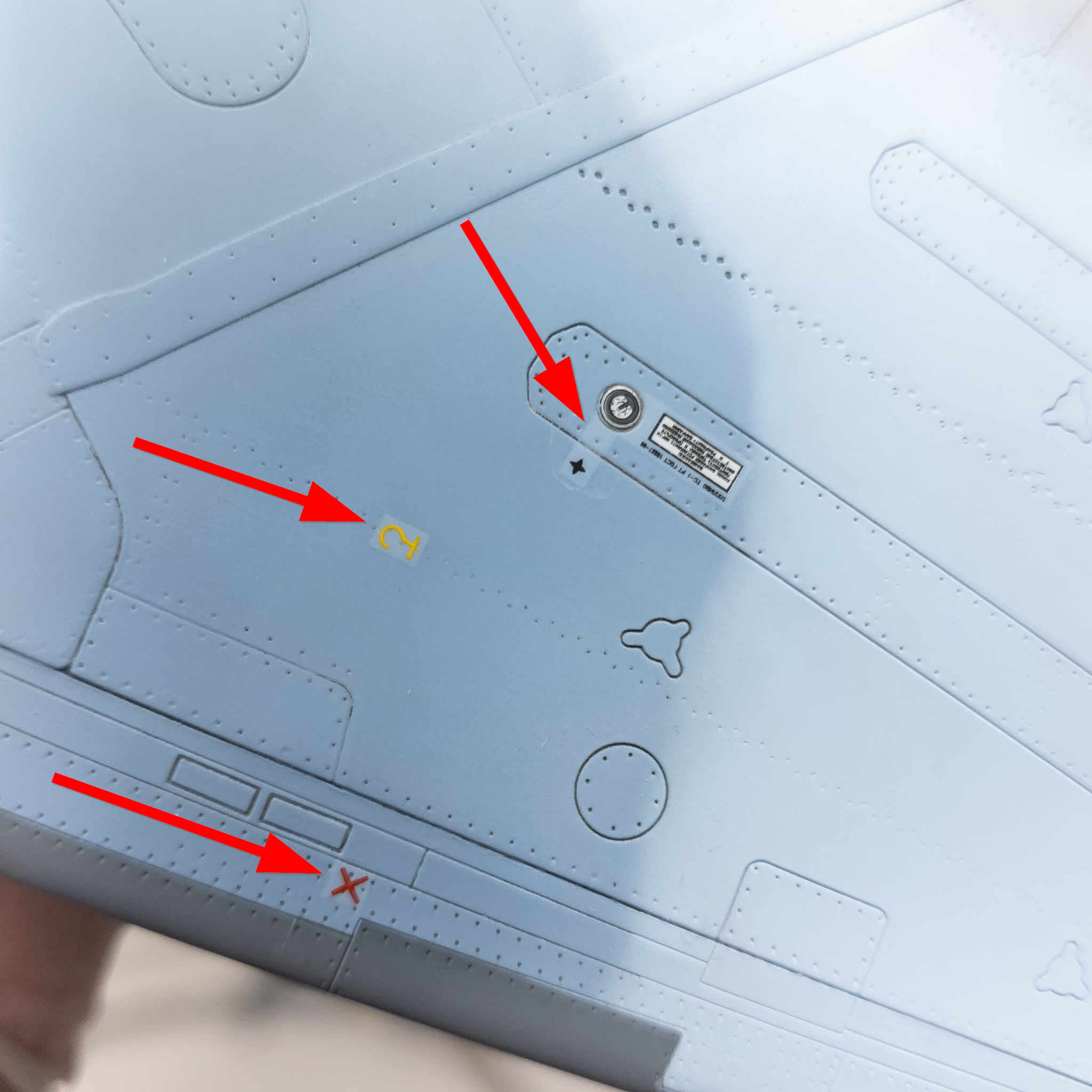
A few years ago, I wrote about how Decals are Magic, and I still stand by that sentiment. Due to the variety of printers and substances and setting solutions, there…
When we're shooting photos of our models, there are a lot of factors to consider. Lighting. Proper white balance. Aperture. But there's one factor that is often overlooked, and that…
UPDATED – AUGUST 2018
This is a post I’ve been meaning to write for a long time. After all, airbrushing is probably my favorite single aspect of modeling. And, with all the airbrushing talk that’s been swirling about the interwebs lately, it seems like the time is right.
So what is this? It’s a deep – I hesitate to say exhaustive – dive into many, many facets of airbrushing, from airbrush selection to paint selection to mixing paints to spray discipline.
Here are some in-post links if you want to skip ahead:
In my opinion, yes. It’s possible to limp along in this hobby with paintbrushes and rattlecans, and even thrive in certain genres like figures, but the atomization, precision, and layering capabilities of an airbrush simply cannot be matched by other means.
Uh, hold on there, chief.
Think of airbrushing like driving, and airbrushes like cars.
If all you’re doing is driving to and from work each day in traffic, you’re not pushing the performance envelope of any car at all. You can get by just fine in any random shitbox. The same goes for airbrushing. If you’re going to setup at standoff distance and just hit a model with a single color of paint, yeah, pretty much any airbrush will do. A nicer airbrush is kinda like a nicer car. It’s a hell of a lot more pleasant to sit in traffic in a Mercedes than an early 90s Kia, but nothing about the drive will really change.

The difference comes with specialty work.
To keep the driving analogy going, let’s pretend that broad work – laying down primers and clear coats for example – is the equivalent of hauling a trailer. And fine, detailed work is like carving corners on a winding country road.
An early 90s Kia is going to suck ass at either of those specialized tasks. For towing, you’d want a truck with the power and gearing to haul the appropriate load. For cornering, you’d want something small and nimble with a finely tuned suspension and excellent steering feel.

If you’re learning or seeking out something of a more general purpose airbrush, a knockoff will probably work just fine. But as you start to push against its performance limitations, that’s when you want to consider investing in something higher end. (more…)
Want to step up your modeling game? Here's an idea - slow the fuck down. What's brought this about? Over the past few weeks, I've seen a spate of builds…
These days, we modelers face an embarrassment of riches when it comes to quality metallic finishes. But as good as many of them are, none of them seem up to…
Ever since I posted about Black Basing a year and a half ago, I've wanted to follow it up with a better, improved version. And since I'm making the foray…
Recently, I was testing out a few new metallics, trying to sort out what exactly I want to use on the F-104. In that test, I came away rather impressed…

So this is the post where I get to shit all over other people’s builds!
Not really. Or at least, that is not my intent.
My intent is to talk about shading panel lines (mainly pre-shading, but also post-shading), and why – if you’re pursuing a realistic or verisimilitudinous finish, it’s a terrible technique that should be shunned and mocked.
Since there as been some confusion since I first posted this, let me elaborate on a few things.
First, let me say that pre-shading actually does some good. It gets modelers – including yours truly – thinking about paint in varying layers of opacity. For that reason alone, it’s often one of those game-changers that elevates people’s build quality, and I think that may be why so many stick with it so doggedly.
I mean, I get it. It’s contrast. And unrealistic, hyperbolic contrast is better than no contrast, right? Just look at the “house style” Hasegawa uses to show off their new kits. It’s utterly lacking in contrast or tonal variation. It’s…awful.

But for all the good panel line shading does, it’s bullshit. Here’s why.
It’s a ton of work. For any kit worth its salt, shading all those panel lines is an exercise in concentration and swearing.

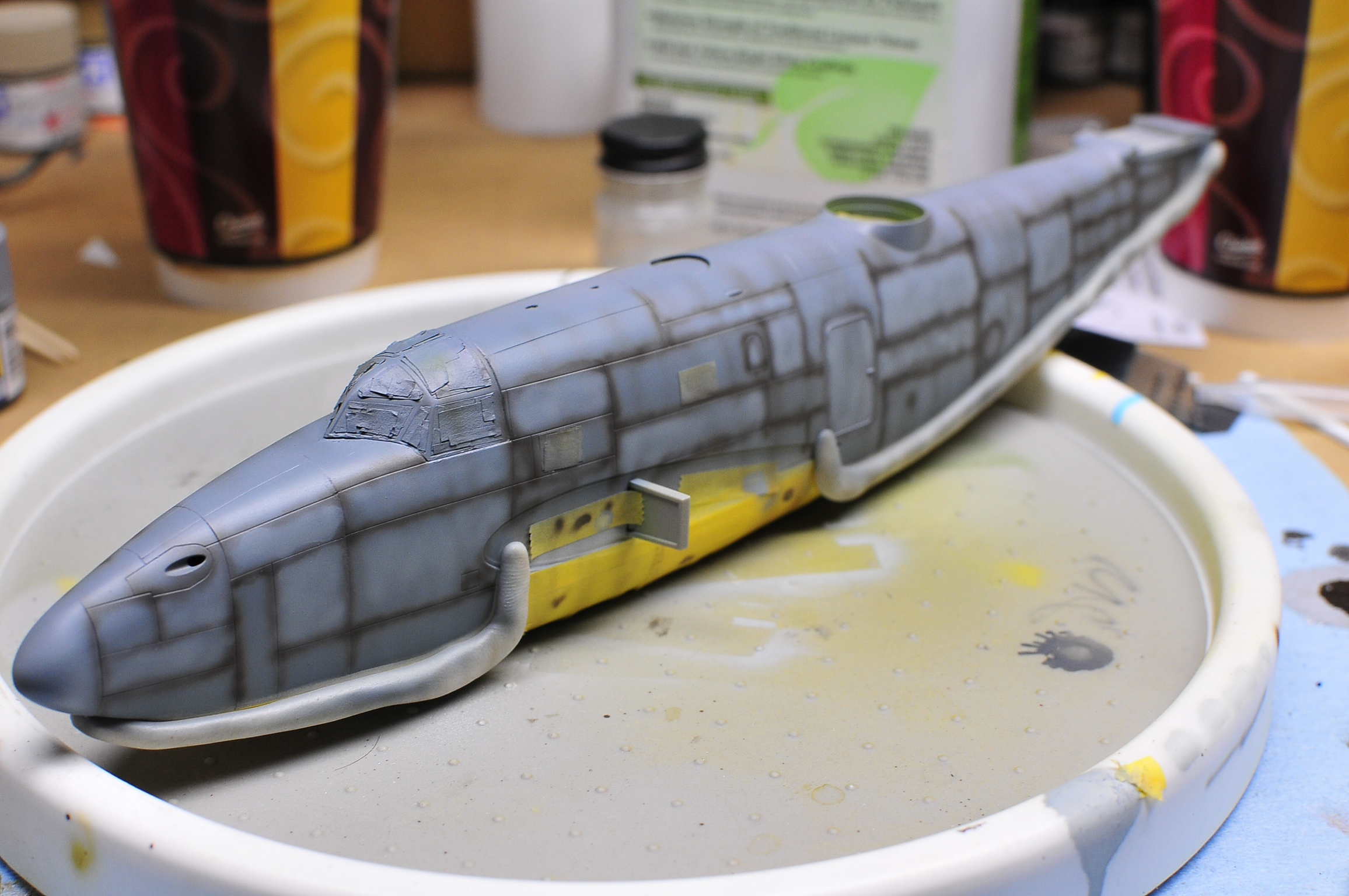
It’s unforgiving. Get a bit too happy with the airbrush and all that work is gone. Play it too cautious and you may have difficulties covering the gray primer or managing the contrast.

Third, it’s just not representative. Yes, the panel lines on some aircraft certainly do get filthy. But look closely. It’s never just the panel lines. And it’s very rarely all of the panel lines. The paint itself gets battered and dirty. Panel line pre-shading (and post-shading) totally misses this, and creates something that looks exaggerated and fake – like one of those overdone HDR images.
Note: I feel I should restate it here: if you’re going after a stylized representation, then by all means go to town. Just don’t make claims to verisimilitude. A Facebook commenter mentioned Monet, and I think that’s a fitting example! Monet was a great painter! But if he made claims impressionism was “realistic”, there would be a lot of laughing.
Look at this Spanish EF-18, for example.
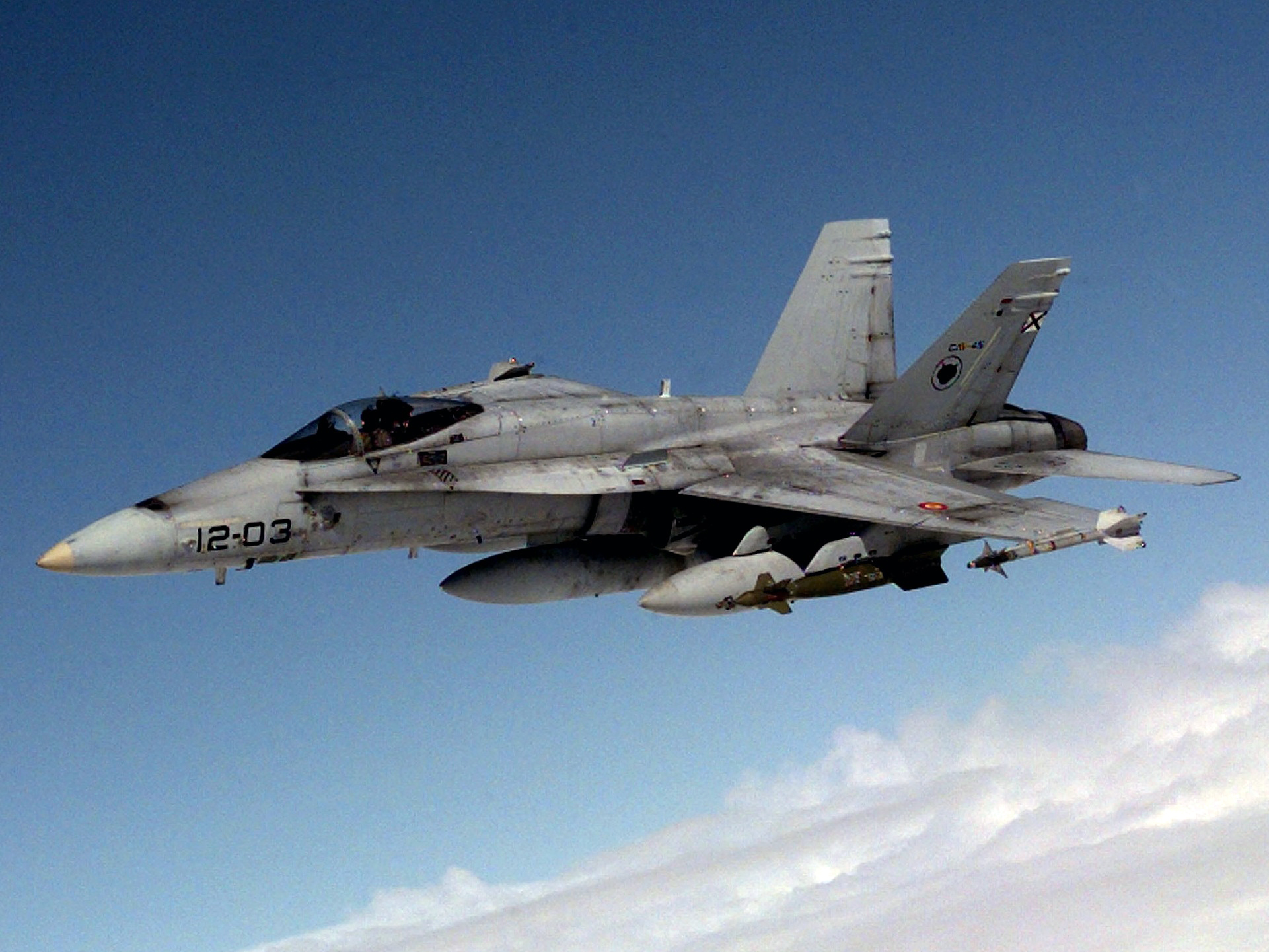
There are lots of visible panel lines…but they are not uniform. And the surfaces of the aircraft itself are filthy, especially around the wingroots.
Or consider this A-6 Intruder from Desert Storm. Plenty of visible panel lines, but they’re all fairly subtle, and there’s a lot else happening on the surface.

Now, I hate to speak ill of others’ work. And that is in no way my intent. But…I have to show examples of what I’m talking about. I’m not commenting at all on the quality of the build or even the rest of the paintwork, which in many of these examples is quite high indeed. I am only showing them to illustrate this technique/style of shading panel lines. If you’re getting upset reading this and want to get all defensive and butthurt about it, that’s okay. One of the examples I’m going to show won at the IPMS Nationals this year, so clearly there is some subjectivity at work. (more…)