The Perfect Black Backdrop
For the most part, I love the hell out of my photo table. Yes, it's big and unwieldy and attracts bugs in the summer months, but the nice even lighting…

For the most part, I love the hell out of my photo table. Yes, it's big and unwieldy and attracts bugs in the summer months, but the nice even lighting…
A few years ago, I found a screaming deal on a gently used Iwata CM-B Custom Micron. Did I need it? Not really. But I'd been hearing Custom Microns talked…
It seems to pop up every so often. Sometimes it carries the bland formality of a form letter. "Dear sir or madam". Or a concerned older person worried there might have…
NOTE: This is not a review per se. There will be no fondling of sprues or the like. Think of this more as an addendum - impressions from mid-way through…
My taste in armor subjects has evolved substantially since I got back into the hobby - away from World War II and toward the tail end of the Cold War.…
Back in April, I posted a lengthy analysis of Tamiya's 1/32 release patterns (LINK). If you have't read it yet, I highly recommend it to at least get a…
When Hobby Boss let it slip that they would be releasing the Flanker family in 1/48 scale, the news was met with guarded excitement. On the one hand, the Flanker…
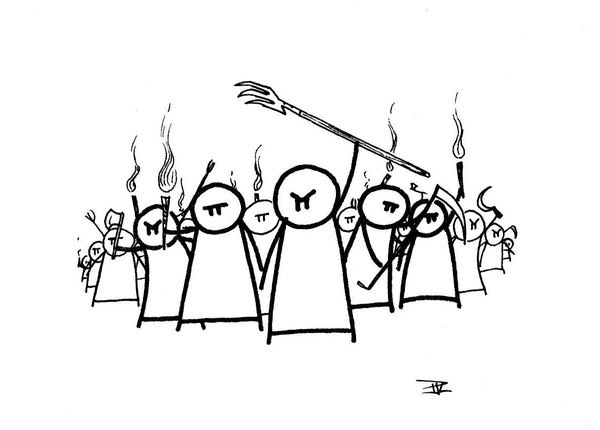
One year ago today, I hit publish on a rant against pre-shading – specifically pre-shading panel lines.
I also hit some nerves, judging by the storm and fury churned up in the post’s comments, on Facebook, and across various forums.
Good.
This hobby is about relaxation and decompression, sure, but for many of us it’s also a journey of constant improvement. Of new techniques and new understandings. It can be easy to forget that, and to fall into the complacency trap. To follow the same rote modeling cookbook over and over and over. Which is how things like pre-shading become so commonplace.
The rant bowled straight into that complacency. It knocked cobwebs loose. Even, amazingly, among the knee-jerk brigade (and there’s always a knee-jerk brigade).
And amid all the epithets hurled my way, and the admonitions of why couldn’t I have been gentler and more equivocating, something happened.
After my deep dive on airbrushing, I've received several requests asking for me to discuss my cleaning process. I get it. Cleaning sucks and it seems like it's probably one…
UPDATED – AUGUST 2018
This is a post I’ve been meaning to write for a long time. After all, airbrushing is probably my favorite single aspect of modeling. And, with all the airbrushing talk that’s been swirling about the interwebs lately, it seems like the time is right.
So what is this? It’s a deep – I hesitate to say exhaustive – dive into many, many facets of airbrushing, from airbrush selection to paint selection to mixing paints to spray discipline.
Here are some in-post links if you want to skip ahead:
In my opinion, yes. It’s possible to limp along in this hobby with paintbrushes and rattlecans, and even thrive in certain genres like figures, but the atomization, precision, and layering capabilities of an airbrush simply cannot be matched by other means.
Uh, hold on there, chief.
Think of airbrushing like driving, and airbrushes like cars.
If all you’re doing is driving to and from work each day in traffic, you’re not pushing the performance envelope of any car at all. You can get by just fine in any random shitbox. The same goes for airbrushing. If you’re going to setup at standoff distance and just hit a model with a single color of paint, yeah, pretty much any airbrush will do. A nicer airbrush is kinda like a nicer car. It’s a hell of a lot more pleasant to sit in traffic in a Mercedes than an early 90s Kia, but nothing about the drive will really change.

The difference comes with specialty work.
To keep the driving analogy going, let’s pretend that broad work – laying down primers and clear coats for example – is the equivalent of hauling a trailer. And fine, detailed work is like carving corners on a winding country road.
An early 90s Kia is going to suck ass at either of those specialized tasks. For towing, you’d want a truck with the power and gearing to haul the appropriate load. For cornering, you’d want something small and nimble with a finely tuned suspension and excellent steering feel.

If you’re learning or seeking out something of a more general purpose airbrush, a knockoff will probably work just fine. But as you start to push against its performance limitations, that’s when you want to consider investing in something higher end. (more…)