Butthurt Prevention Note: This hobby is highly dependent upon preferences and perspectives. What follows is my own. Yours may differ. And that’s totally fine.
When I first came back to modeling, I figured I’d start with something simple and cheap. So I picked up a Revell SBD Dauntless. Maybe, once upon a time, it was an innovative kit. But by today’s standards – or even by the standards I was accustomed to as a kid – it was a piece of trash. I quickly christened it the Fail Dauntless and consigned it to paint mule duty.
I think it’s vaguely criminal that Revell still charges money for this
I moved on to Tamiya’s P-51B Mustang, and the experience of building a good kit was downright revelatory.
MUCH better…
Since that time, I’ve completed 46 kits (I had to go count!). And I’ve learned a few things.
I’ll be talking about some of those learnings over a handful of posts. Let’s start off with this:
My definition of a “good kit” is hardly ever touched on in reviews.
Kit reviews generally look at two things – detail and accuracy. To me, those are only about half of what makes a good kit good. In fact, I’m willing to give up some of both if other aspects hold up.
To me, the quality of a kit rests on four attributes: (more…)
My recent rant against egregious panel line shading has drawn quite a hefty response. Plenty of voices of support...and of butthurt and defensiveness. A few who have mistaken the entire…
For October's Sprue Cutters Union, The Combat Workshop asks: Whether it's a part of the assembly process, a finishing technique, or a particular tool, what do you think are the…
The annual Austin IPMS contest was today. Despite falling on the same weekend as ACL and the TX/OU game, turnout was actually pretty good. There were a lot of entries,…
Recently, a certain modeler shared his latest build on a certain forum. A very nice build, with some really excellent touches that I think a lot of modelers often miss.
The thread predictably filled up with comments like “WOW that looks superb – great finish” and “that’s a beautiful build! I love everything about it…” and “that is a superb model! thank you for sharing”.
While I don’t disagree, I saw one area that I thought could be improved upon. Feedback on completed builds is a bit touchy because the damn things are done, and it’s not like we can go back and address. But there’s always the next build, right?
So I posted the following:
Really like it – nice touches especially with the heat shield shading and the scuffed cockpit sills! Really hoping to tackle on of these big F-4s myself, just have too much on the go at the moment.
Only thing I might suggest for the future is a slightly more subtle shade for the panel line wash, but I can say that about way too many of my own builds!
Mine was (and remains) the only actual feedback in the entire thread. The rest is a string of “attaboys”.
In another thread…a sprawling reaction to my recent post on panel shading…my feedback on the F-4 was specifically called out. There was some “why I never!” about modelers denigrating other modelers based solely on their biases, and the frustratingly common refrain that feedback or opinions equal some kind of tyrannical modeling new world order.
The modeling illuminati command you to stop drybrushing! Mwahahaha!
Attaboy Culture and the Fear of Feedback
Painting in broad strokes, the modeling community is bizarrely averse to feedback of any kind. Touch that wire and you immediately get hit with accusations of trashing other modelers.
Why? Because “modeling is supposed to be fun”? Because “modeling is just a silly hobby”? It’s both of those things, but you know what? Fuck that. It can be both of those things and welcome feedback and constructive criticism.
So this is the post where I get to shit all over other people’s builds!
Not really. Or at least, that is not my intent.
My intent is to talk about shading panel lines (mainly pre-shading, but also post-shading), and why – if you’re pursuing a realistic or verisimilitudinous finish, it’s a terrible technique that should be shunned and mocked.
Since there as been some confusion since I first posted this, let me elaborate on a few things.
I’m not saying all shading is bad. Far from it. Just the kind that tunnel visions on panel lines.
I’m not even saying that panel line shading is bad. If you’re doing it for stylistic reasons, fine. To each his own. I’m talking about pursuing realism or verismilitude, and then shading the hell out of panel lines.
I’m also not saying that panel line washes are bad. I use washes on every aircraft that I build. To me the key here is subtlety.
Verisimilitude – “lifelikeness”, the appearance of being real
Because Reasons
First, let me say that pre-shading actually does some good. It gets modelers – including yours truly – thinking about paint in varying layers of opacity. For that reason alone, it’s often one of those game-changers that elevates people’s build quality, and I think that may be why so many stick with it so doggedly.
I mean, I get it. It’s contrast. And unrealistic, hyperbolic contrast is better than no contrast, right? Just look at the “house style” Hasegawa uses to show off their new kits. It’s utterly lacking in contrast or tonal variation. It’s…awful.
Is it plastic, or die cast?
But for all the good panel line shading does, it’s bullshit. Here’s why.
It’s a ton of work. For any kit worth its salt, shading all those panel lines is an exercise in concentration and swearing.
It’s unforgiving. Get a bit too happy with the airbrush and all that work is gone. Play it too cautious and you may have difficulties covering the gray primer or managing the contrast.
Hey, where’d all that shading work go?
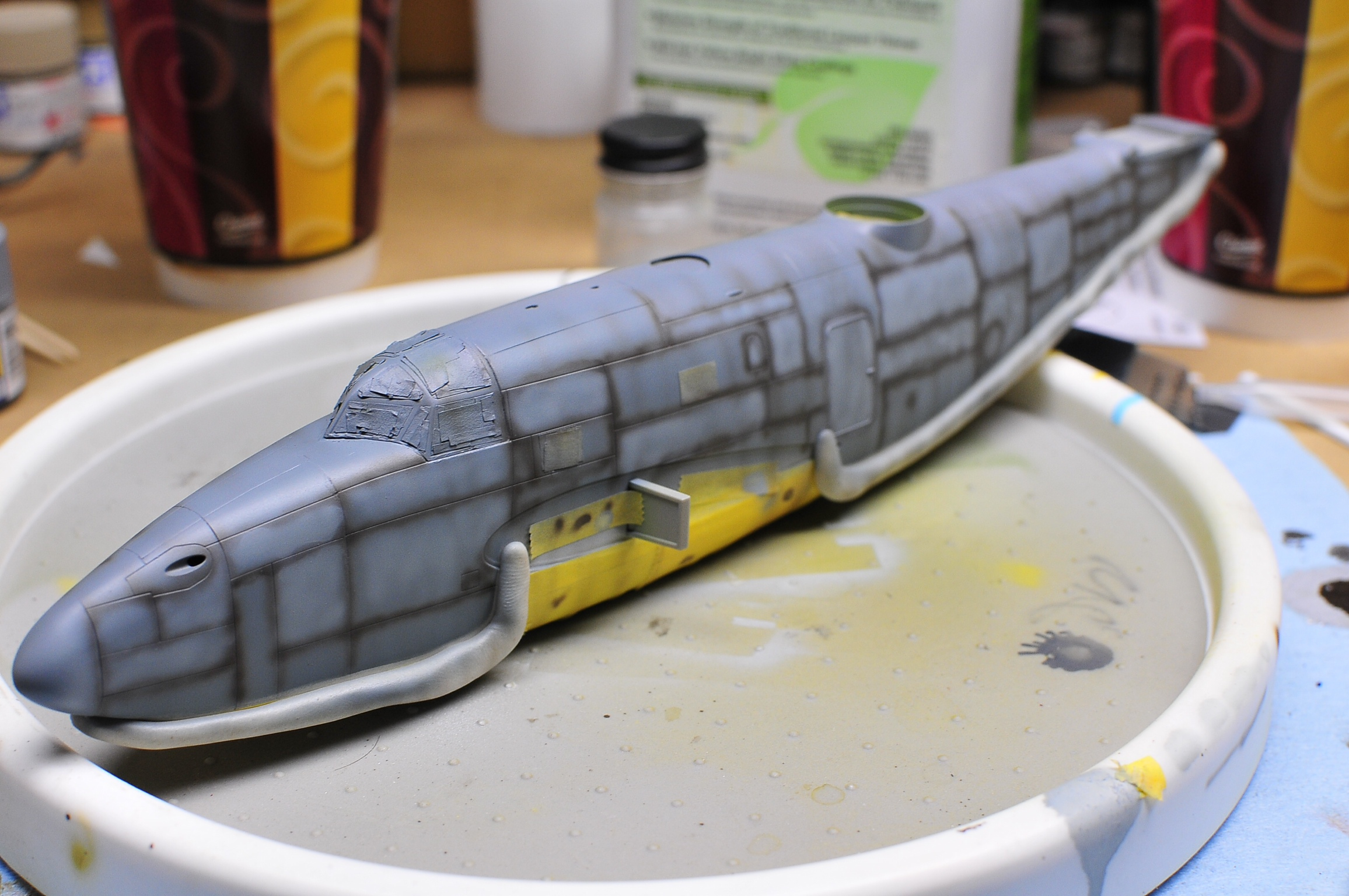
Third, it’s just not representative. Yes, the panel lines on some aircraft certainly do get filthy. But look closely. It’s never just the panel lines. And it’s very rarely all of the panel lines. The paint itself gets battered and dirty. Panel line pre-shading (and post-shading) totally misses this, and creates something that looks exaggerated and fake – like one of those overdone HDR images.
Note: I feel I should restate it here: if you’re going after a stylized representation, then by all means go to town. Just don’t make claims to verisimilitude. A Facebook commenter mentioned Monet, and I think that’s a fitting example! Monet was a great painter! But if he made claims impressionism was “realistic”, there would be a lot of laughing.
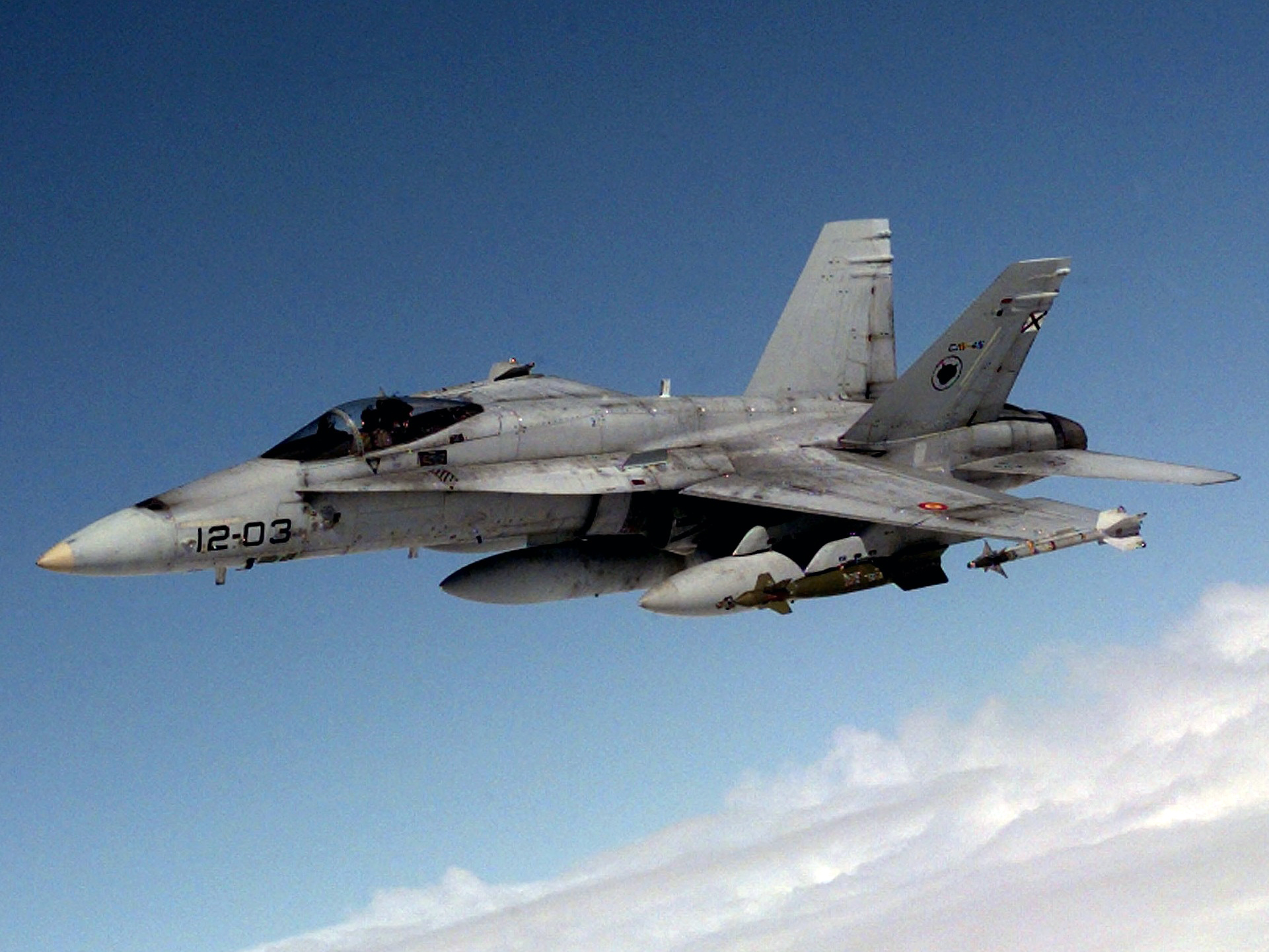
Look at this Spanish EF-18, for example.
There are lots of visible panel lines…but they are not uniform. And the surfaces of the aircraft itself are filthy, especially around the wingroots.
Or consider this A-6 Intruder from Desert Storm. Plenty of visible panel lines, but they’re all fairly subtle, and there’s a lot else happening on the surface.
What I’m Talking About
Now, I hate to speak ill of others’ work. And that is in no way my intent. But…I have to show examples of what I’m talking about. I’m not commenting at all on the quality of the build or even the rest of the paintwork, which in many of these examples is quite high indeed. I am only showing them to illustrate this technique/style of shading panel lines. If you’re getting upset reading this and want to get all defensive and butthurt about it, that’s okay. One of the examples I’m going to show won at the IPMS Nationals this year, so clearly there is some subjectivity at work. (more…)
Since returning to modeling in 2010, I’ve seen several new kitmakers come onto the scene. Quality has sometimes varied. Some manufacturers burst out of the gates while others took a few kits to find their footing. But they’re all injecting a steady stream of vitality into the hobby and keeping the established players on their toes. For all of those who like to gripe about the hobby dying out, these new manufacturers offer a powerful argument that that is just not the case.
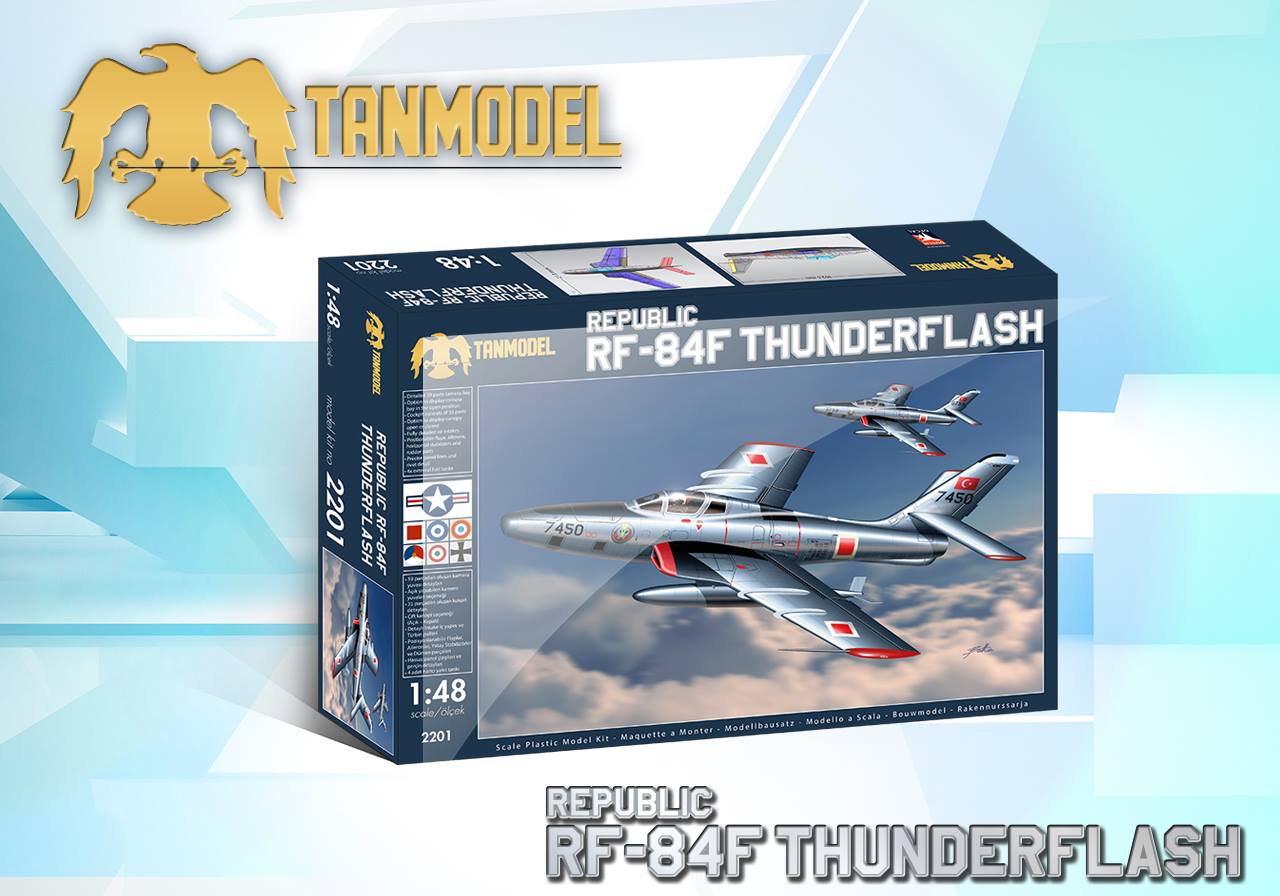
And now we have another to keep an eye on – TANMODEL.
Bucking the trend of new kitmakers emerging out of the Asia Pacific region, TANMODEL comes to us from Istanbul, Turkey. They’ve already released one kit – a 1/72 Hurkus trainer – but it’s their impending 1/48 RF-84F Thunderflash that first brought them to my attention.
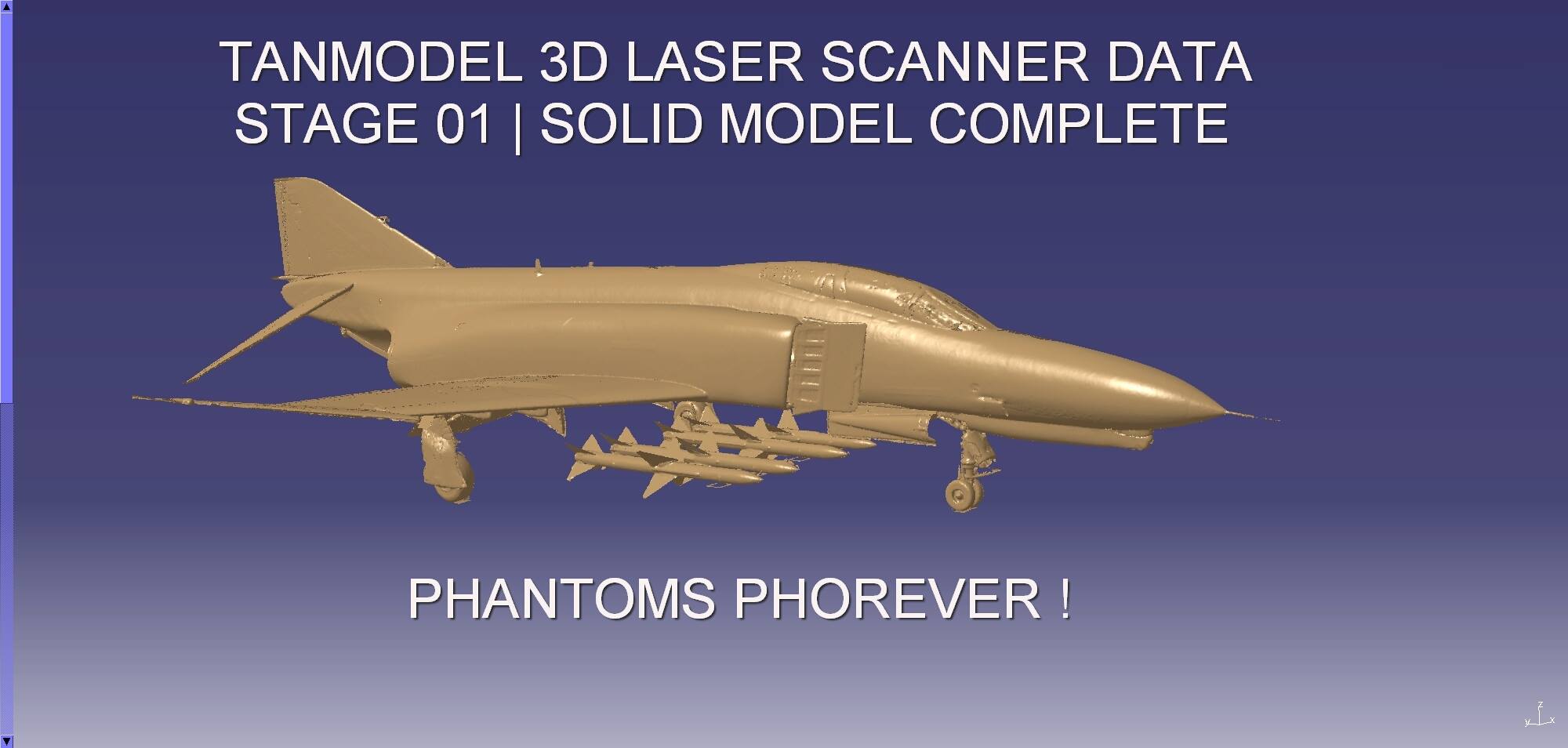
The more I looked into TANMODEL, the more interested I became. From their commitment to working from 3D scans of actual 1:1 aircraft to the quote on their website of “thinking like a modeler, not despite the modeler”, to their rather ambitious roadmap, which includes a 1/32 F-4E Phantom, 1/32 F-111 Aardvark, 1/32 F-5A and F-5B Freedom Fighters, and a new-tool 1/48 SR-71 Blackbird.
Who is this company? To find out, I reached out to TANMODEL’s founder, Baris Tansoy, to see if he’d be willing to answer a few questions. Graciously, he accepted, and his answers follow below. Enjoy! (more…)
The Combat Workshop poses an interesting topic for September's Sprue Cutters' Union: What's your preferred scale(s)? What do you like, what do you not like, and why? I've put a…
Labor Day weekend. The family out of town. The house to myself. The heat of summer starting to (kind of) relinquish its grip. The perfect time, in other words, to…
When I came back to modeling in 2010, I initially had a lot of questions about glue. After all, my last experience had been building models as a kid, and the glue situation was pretty much as follows:
Testors tube cement, which was gooey and didn’t work very well
Testors liquid cement, which just didn’t work very well
Superglue with accelerator, which worked really well but fogged the hell out of everything
White glue, which was for wusses
My questioning period lasted about two weeks, until I discovered the awesome power of modern solvents. But across various forums and groups, I still see glue questions pop up all the time. So here’s a quick primer.
Do you want to glue plastic to plastic?
Use a liquid cement, also known as solvent cement, liquid welder, or other variations and combinations of these words.
This stuff works by literally melting plastic, so that it fuses together and cures as a single piece. It is stunningly effective, and if you choose the right welder and have a good join to work with, the entire process from application to cured takes maybe a minute, tops. (more…)











 When I came back to modeling in 2010, I initially had a lot of questions about glue. After all, my last experience had been building models as a kid, and the glue situation was pretty much as follows:
